Open Concept Living: Design Tips and Considerations
Quick summary
Open-concept floor plans connect the kitchen, dining, and living areas into one shared space, but they only work when zoning, lighting, sound, and HVAC get equal attention. This guide walks Bethesda and DMV homeowners through structural questions, sight-line planning, and the finish choices that hold a wall-free room together. We cite the AIA Home Design Trends Survey and the NAHB report on what home buyers really want so the recommendations match recent market data. Most of the planning applies whether you are removing a wall in a 1950s rambler or finishing a new home addition.
Table of contents
Is Open Concept Right for Your Home?
Open layouts still dominate American renovations. The NAHB report "What Home Buyers Really Want" consistently ranks a kitchen open to the family room near the top of buyer preferences. See the NAHB What Home Buyers Really Want study for the underlying data.
The AIA Home Design Trends Survey tracks the same shift from the architect side, including the rise of multipurpose great rooms and informal eating areas. Read the AIA Home Design Trends Survey before deciding how much wall to remove.
Open concept works best when the household values shared cooking and entertaining, tolerates kitchen noise during TV time, and can absorb the higher cost of finishes that show from every direction. It works less well when one resident needs quiet for work calls or when the kitchen smells should not drift into the bedrooms.
Structural Questions to Answer First
Identify which walls are load bearing before you draw the new layout. A structural engineer can confirm in one site visit. Removing a load-bearing wall requires a beam, posts, and a foundation check.
A flush beam hides inside the ceiling and keeps the ceiling plane uninterrupted. A dropped beam sits below the ceiling and costs less but adds a visual line across the room.
Check the wall for plumbing stacks, HVAC ducts, and electrical risers. Rerouting a vent stack to the roof or moving a return duct can cost more than the beam itself.
Zone the Space Without Adding Walls
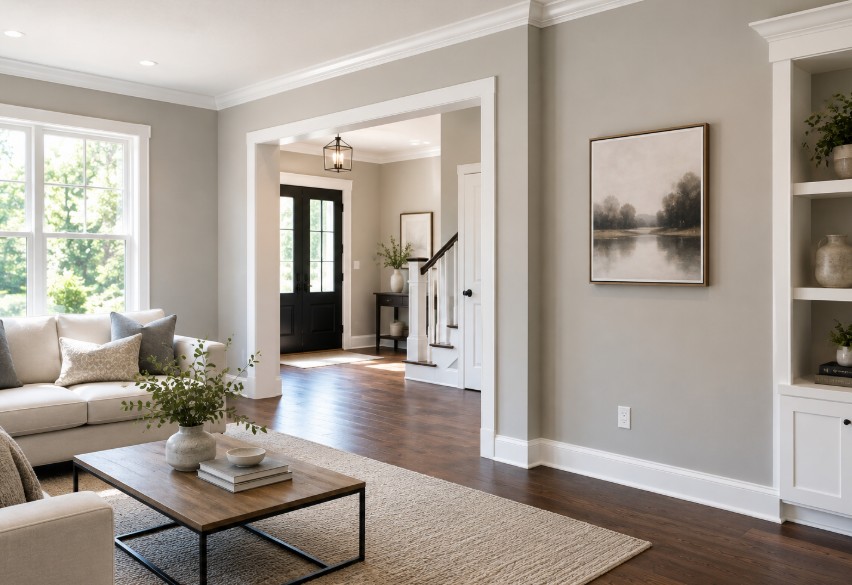
A great room needs three or four legible zones: cooking, eating, sitting, and sometimes a desk or homework area. Define each zone with one or two of these tools instead of partitions.
- Rugs: a rug under the dining table and another in the living area mark zone edges
- Ceiling treatments: a tray ceiling or a wood-clad section can sit above the seating zone
- Lighting layers: pendants over the island, a chandelier over the table, sconces above the sofa
- Furniture orientation: a sofa back can act as a soft wall between living and dining
- Half walls or low cabinetry: 36 to 42 inches tall, enough to anchor a zone without blocking sight lines
Keep one consistent flooring material across all zones. Switching from hardwood to tile mid-room shrinks the space and emphasizes the seam.
Zoning one open great room without walls
A typical DMV wall-removal: a 1940s–50s North Bethesda kitchen opened to the dining and living areas, with a flush beam in place of the old load-bearing wall.
- 1Rugs outline the dining and living zones
- 2Tray ceiling caps the living zone overhead
- 3Layered lighting: pendants over the island
- 4Sofa back works as a soft divider
- 5Island / low cabinetry anchors the kitchen
Layered Lighting for One Large Room
A single ceiling fixture cannot light a great room. Plan three layers: ambient, task, and accent.
Use recessed cans on a separate dimmer for the cooking zone, pendants on a second dimmer over the island, and a third circuit for the living area. Add table lamps and floor lamps for evening light.
Put every overhead fixture on a dimmer. The same room that hosts a dinner party also serves as the morning coffee zone, and the two lighting levels are not the same.
Control the Sound
Open rooms amplify every sound. Hard floors, flat drywall ceilings, and large windows bounce noise from the dishwasher to the sofa.
Soften the room with a thick wool rug, full-length drapery, and an upholstered sofa with a fabric back rather than a leather one. Acoustic ceiling panels disguised as wood slats absorb mid-range sound without looking like an office.
Choose a quiet dishwasher rated at 44 decibels or lower. The cheap unit will run while you watch TV ten feet away.
HVAC and Energy Efficiency
One large room with one thermostat reads warm near the kitchen and cool near the front windows. Talk to the HVAC contractor before construction starts.
Add or relocate supply registers so each zone has its own conditioned air. Consider a second return near the kitchen ceiling to pull heat and cooking smells out of the room.
Plan a real range hood vented to the outside, sized for the cooktop in cubic feet per minute. A recirculating hood does not remove heat or steam.
Finishes That Tie the Space Together
A wall-free room shows every finish at once. The kitchen now faces the living room, so the kitchen finishes need to read as furniture. If the kitchen itself is tight, our small kitchen layout guide covers how to keep it functional in an open plan.
Pick cabinetry colors and hardware that suit a living room as well as a kitchen. Match the kitchen flooring to the living-area flooring exactly. Keep wall paint and trim consistent across all zones.
Treat the back of the island as a finished piece. It is the first thing the living-room sofa looks at.
DMV-Specific Notes
Many Bethesda, Chevy Chase, and Silver Spring homes were built between 1925 and 1965 with small, separate rooms. Removing a wall in these houses often crosses a load-bearing line, a plaster ceiling, and original hardwood flooring that does not match the kitchen floor.
Plan for flooring repair where the old wall sat. Either weave new hardwood into the existing floor or refinish the full room so the patch disappears.
Montgomery County requires permits for wall removal and for any structural changes. Build the permit timeline into the project schedule before ordering cabinetry.
Many DMV row houses run narrow and long. An open plan from front to back works only if the middle section gets natural light, either through a side window, a skylight, or a rear addition with large glazing.
If you are still deciding between staying put and moving out, weigh the renovation against the cost of relocating. This guide to whether to rent or buy when moving to the suburbs is a useful starting point before you commit to opening up a home you may not keep.
Mistakes to Avoid
- • Tearing out the wall before confirming whether it is load bearing
- • Designing the kitchen first and then squeezing in the living room
- • Mixing three flooring materials in a single open room
- • Picking a loud dishwasher and a noisy range hood for a room you also relax in
- • Skipping ceiling acoustic treatment in a room with hard floors and large windows
- • Forgetting a coat closet or drop zone near the entry, then piling shoes on the great-room floor
When a Designer Pays for Itself
Wall removal touches structure, plumbing, electrical, HVAC, and finish selection at the same time. A designer sequences the trades, coordinates with a structural engineer, and prevents the gaps that show up after the drywall is closed.
iDesign Interior Solutions has opened up kitchens and great rooms as part of full home remodeling projects across Bethesda, North Bethesda, Rockville, Potomac, and the wider DMV. We plan the zoning, the lighting, the acoustics, and the finishes as one job, not five.
Thinking about opening up your floor plan?
Book a free design consultation and we will review the structure, the sight lines, and the finishes before you commit to a wall removal.
Request your free consultation